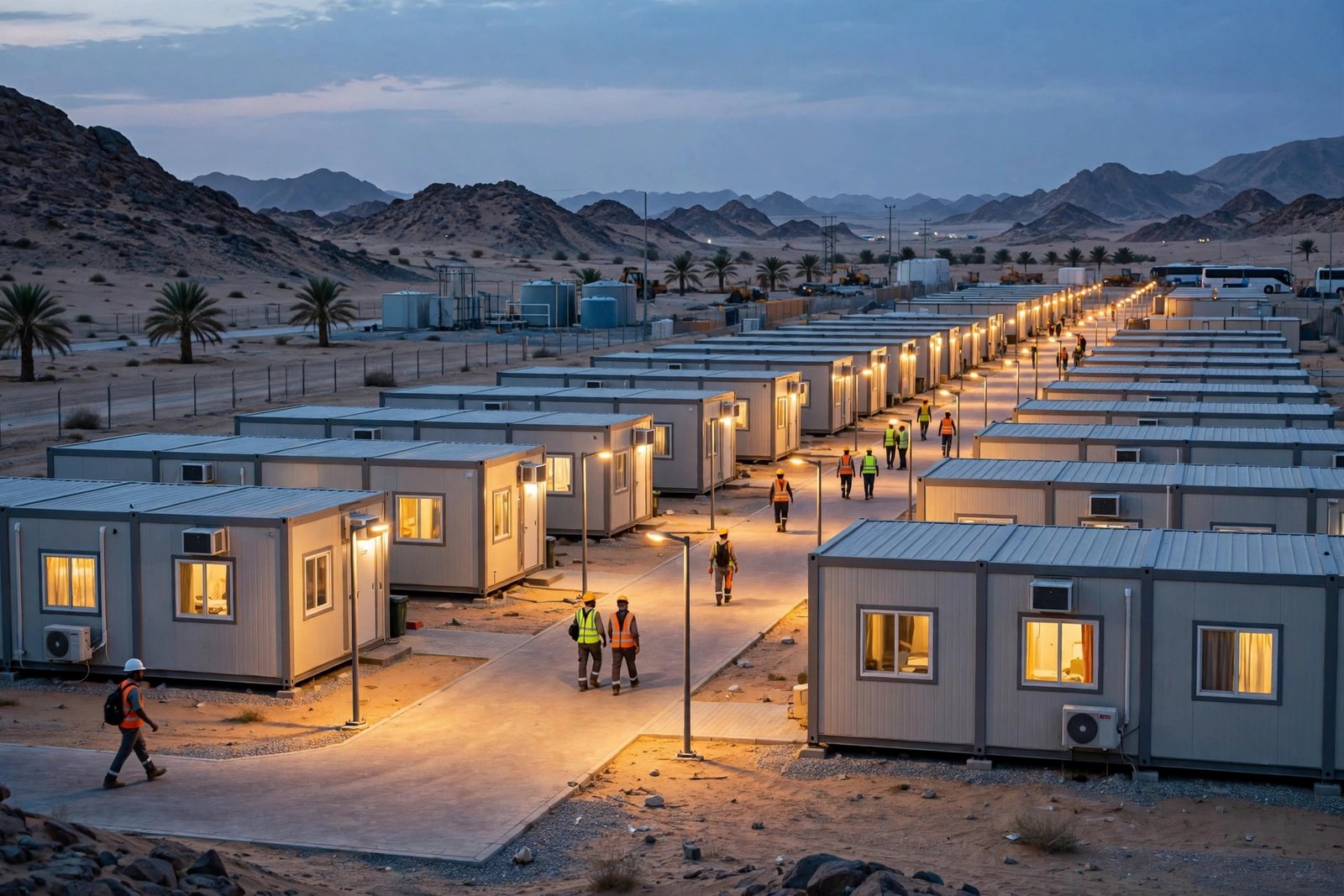
Running an industrial camp in Saudi Arabia is expensive. Food, transport, maintenance, utilities, staff time and empty beds all add up, and when a mega-project runs for years, even a small daily waste becomes a very large annual cost. The pressure to cut costs is real, but cutting worker welfare is the wrong way to save money. Unhappy, uncomfortable workers leave faster, get sick more often, and create audit and reputation problems that cost far more than they save.
The camps that control costs best do not work harder. They see more clearly. They know exactly how many beds are occupied, how many meals are really needed, which bus is half empty, and which air conditioner will fail next week. That visibility is what turns cost control from guesswork into a daily habit.
Request a free 30-minute tour of CampWise here
1. Why camp costs keep rising in Saudi Arabia
Costs rise for reasons that are hard to see on a spreadsheet. A camp may be paying for rooms that look full on paper but are empty in reality. Meals may be ordered for workers who are on leave, on night shift, or already transferred to another site. Buses may run the same route every day even when the shift pattern has changed. Maintenance may be done only after something breaks, when repair is most expensive and a room is out of use for days.
In Saudi Arabia, the scale makes this worse. Camps serve hundreds or thousands of workers across multiple sites, from Riyadh and Jeddah to Jubail, Yanbu, NEOM and the Red Sea coast. Without one system, each site keeps its own records, and head office never gets a true total. Decisions are then made on old numbers, and money leaks quietly every day.
2. See every cost in one dashboard
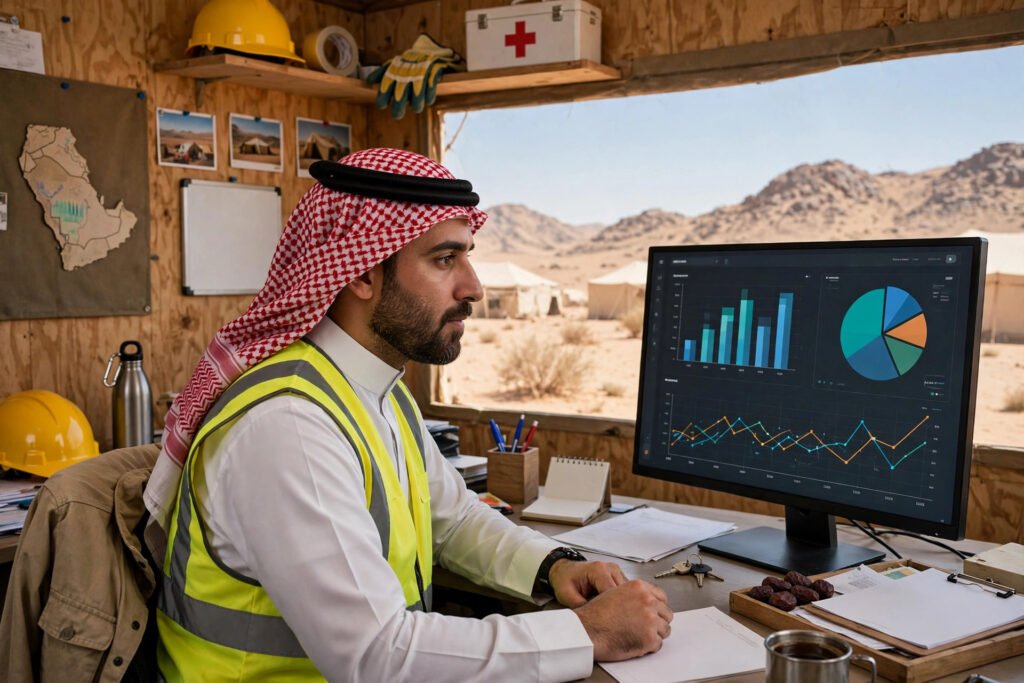
The first saving comes from seeing the whole operation at a glance. A camp management system should show live occupancy by location, camp, building, floor, room and resident, not a weekly report that is already out of date. When a manager can see that one building is at 98 percent occupancy and another is at 62 percent, rooms can be balanced before new accommodation is rented or built.
The same dashboard should connect occupancy to other costs. If 400 workers are on site tonight, the kitchen should cook for 400, not for the 520 who were there last month. If a shift ends at a different time, transport should change with it. One source of truth removes the double counting that spreadsheets almost always create.
3. Cut waste in rooms, food and transport
These three areas usually hold the biggest savings, and none of them requires cutting welfare.
Rooms: Assign beds by actual check-in and check-out, not by a fixed list. When a worker leaves, the bed should become available the same day, not after a manual update weeks later. That alone can delay the need for extra accommodation.
Food: Plan meals from live headcount and shift rosters. Less overproduction means less waste, lower food cost, and fresher meals for workers. It also helps the kitchen plan for dietary needs and Ramadan or holiday schedules without panic ordering.
Transport: Match buses to real shift patterns and occupancy. A half-empty bus running twice a day is a visible waste once it appears on a dashboard. Better routing saves fuel, driver hours and vehicle maintenance, while workers still get reliable, safe transport.
The point is simple: workers should notice better service, not fewer services. Costs fall because waste falls.
Request a free 30-minute tour of CampWise here
4. Prevent expensive maintenance surprises
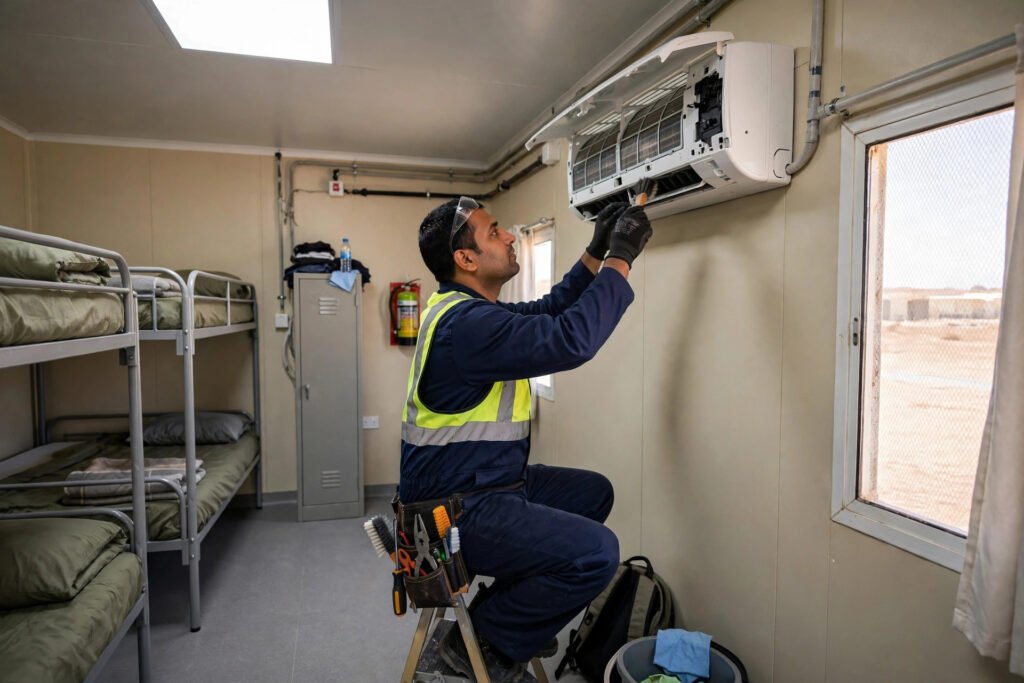
Emergency maintenance is always more expensive than planned maintenance. A broken air conditioner in a Saudi summer is not just a repair bill. It can make a whole room unusable, force workers to move, and create a welfare complaint that reaches an auditor.
A good system tracks every asset, every maintenance request and every repair history in one place. Requests do not get lost in a WhatsApp group or a paper notebook. Managers can see which rooms, kitchens, laundries and facilities need attention first, schedule preventive work before peak season, and keep spare parts ready for the items that fail most often.
Over a year, this changes the cost curve. Fewer emergencies, shorter room downtime, and a clear record of what was fixed, when, and by whom. That record is also exactly what an inspector wants to see.
5. Keep workers happy, and keep audits clean
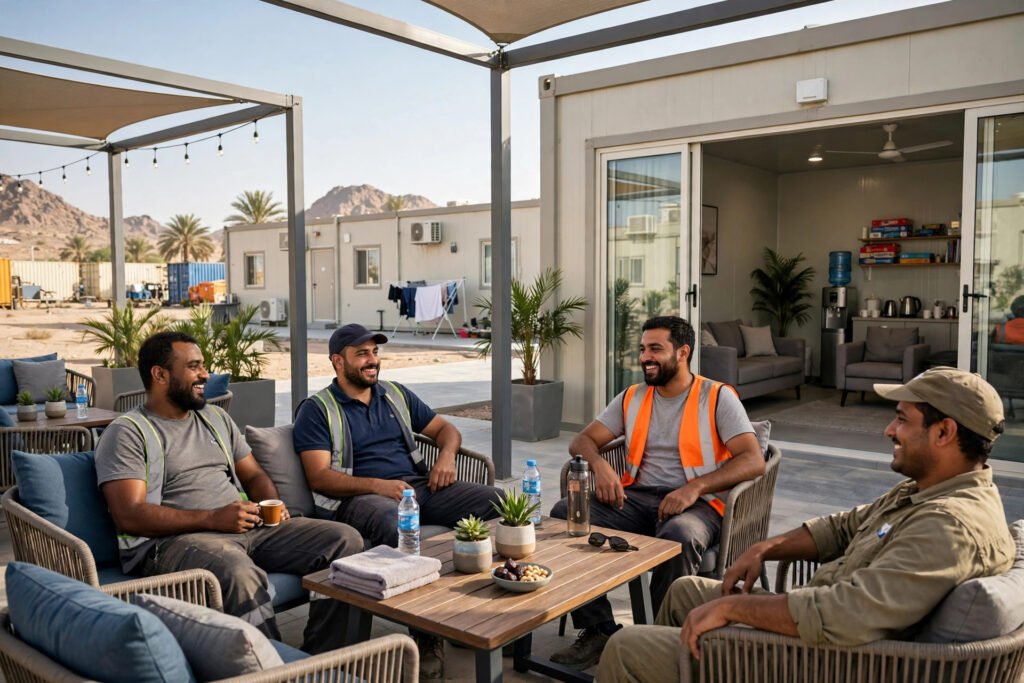
Worker welfare is not a cost to minimise. It is a protection against much larger costs. Clean rooms, working facilities, fair room allocation, fast complaint resolution and clear visitor and access control all build trust. Workers who trust the system stay longer, which reduces recruitment, onboarding and training costs.
Audit readiness works the same way. When occupancy, check-in and check-out, access, maintenance and activity are all logged in one system, an audit becomes a report, not a rescue operation. There is no last-minute search for papers, no conflicting numbers from different sites, and no need to explain why the numbers do not match. For projects linked to Saudi Vision 2030 and major developments, that readiness is now a basic expectation, not a bonus.
6. What to look for in a camp management system
Not every system will deliver these savings. Before choosing one, check these points:
- Live occupancy from location down to resident level, updated by real check-in and check-out.
- Room assignment, facilities, inventory and maintenance in the same system, not in separate tools.
- Role-based access, so site managers, head office and auditors each see what they need, and nothing they should not.
- Reports and exports that finance and operations can actually use, without rebuilding spreadsheets.
- Activity and audit tracking, so every change has a clear record.
- Bilingual, Saudi-ready operation, including Arabic and English, for the workforce and the clients you serve.
If a system only stores names in a list, it will not cut costs. If it shows live operations and connects them to food, transport and maintenance, it will.
The bottom line
Cutting camp costs does not mean cutting corners, cutting comfort, or cutting corners on safety. It means cutting waste, cutting delays, and cutting the guesswork that makes managers pay for beds, meals, buses and repairs they do not actually need.
Start with visibility. When you can see occupancy, food, transport and maintenance in one place, savings follow naturally, and worker welfare improves at the same time. That is the combination Saudi industrial camps need: lower operating cost, happier workers, and a camp that is ready for any audit, any day.


